Source Metal Car Hood Support for Auto, Motorcycle, and Home Appliance
Find 30 listings for Metal Car Hood Support designed for compression load and bi-directional damping. Buyers can compare models like 100# and 53301-02270 from suppliers in China with options for customization and neutral packaging.
Key considerations
Products List


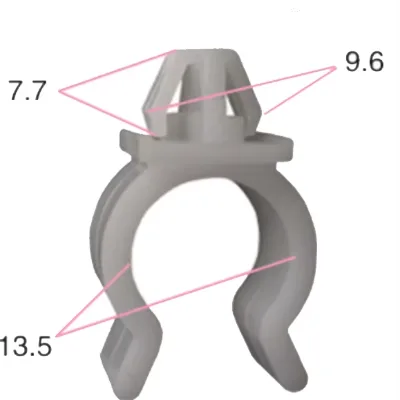
Automotive Hood Support Rod Clip Suitable for Honda Front Hood Support Rod Clip
$0.04 - $0.05
MOQ: 1000 Pieces


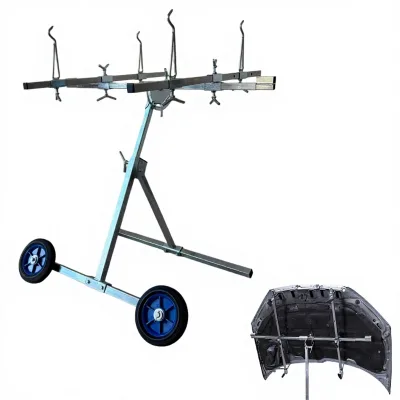


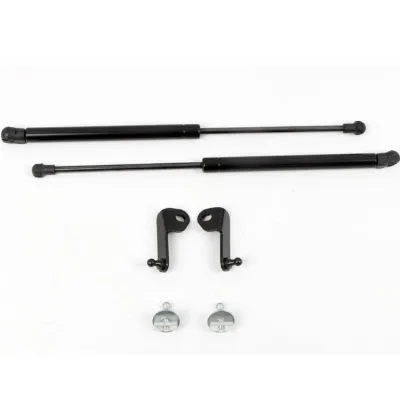
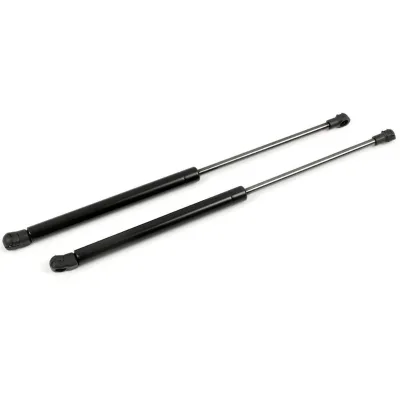


Factory Direct Supply Automotive Front Bumper Cover and Guard Car Bumpers
$0.10 - $10.00
MOQ: 100 Pieces


Comprehensive Sourcing Guide
Strategic Sourcing Guide for Metal Car Hood Support Systems
Understanding Product Specifications and Technical Attributes
When sourcing Metal Car Hood Support systems, buyers must first distinguish between the specific technical attributes observed in the market and general industry expectations. The core product category encompasses hydraulic struts and gas springs designed to hold automotive hoods in an open position. Based on current market data, these components are frequently manufactured from cold-rolled steel, with piston rods specifically constructed from 45# steel or seamless steel pipe to ensure structural integrity under compression loads. The physical form is predominantly cylindrical, designed to fit into specific mounting points on vehicle chassis.
A critical observation in the supply chain is the variation in model specifications. Buyers will encounter models such as the 100# series, as well as specific configurations like the 10/22 680610N and 8/18 600360N. These numerical designations typically refer to the force output in Newtons and the stroke length or overall dimensions in millimeters. For instance, the 680*610N designation suggests a specific force and dimension combination required for heavier hood assemblies. The standard discharge or performance metrics for these units often align with Euro III standards in certain contexts, though this should be verified against the specific vehicle application.
The functional capabilities of these supports extend beyond simple lifting. The observed product functions include measurement, drive, buffer, phonation, and pressing actions. This indicates that the components are engineered to provide damping characteristics, specifically bi-directional damping, which ensures smooth opening and controlled closing of the hood. The installation method is versatile, allowing for installation at any angle, which is a crucial factor for automotive engineers designing varied hood geometries. Furthermore, the center distance between mounting points is often customizable, requiring precise communication with the supplier to match the vehicle's chassis design.
Compliance, Certification, and Material Standards
Navigating the compliance landscape for automotive components requires rigorous verification of material standards and certifications. The supply chain for these metal supports is heavily regulated, particularly regarding the origin and quality of the steel used. A significant portion of the observed inventory originates from Hebei Province and Zhejiang in China, regions known for their manufacturing capabilities but requiring strict quality oversight.
Buyers must scrutinize the certification status of potential suppliers. While some market listings reference certifications such as SGS and IATF16949, these are not universal guarantees for every listed product. The IATF16949 standard is the global benchmark for automotive quality management systems, and its presence indicates a supplier's commitment to defect prevention and variation reduction. However, buyers should not assume this certification applies to all SKUs without explicit confirmation. Similarly, while some product descriptions mention "CE" as a background factor, this should be treated with caution and verified against the specific regulatory requirements of the destination market.
Material standards are equally critical. The piston rods are frequently described as seamless steel pipes, a specification that directly impacts durability and resistance to corrosion. The base material is often cold-rolled steel, which offers a balance of strength and formability. When evaluating a supplier, buyers should request documentation proving that the raw materials meet these specific standards. The discharge standards, such as Euro III, may apply to the manufacturing process or the final product's environmental impact, but this requires clarification. Buyers should verify if the "Euro III" reference pertains to emission standards for the manufacturing facility or a specific performance metric of the gas spring itself.
Cost Drivers and Pricing Dynamics
The pricing structure for metal car hood supports is influenced by a complex interplay of material costs, customization levels, and order volume. The observed price range in the market is extensive, spanning from $0.04 to $1,000 per unit. This wide variance is not indicative of quality differences alone but rather reflects the diversity of the product catalog, which includes simple struts to complex, customized assemblies. The lower end of the spectrum likely represents standard, high-volume items, while the upper end may include specialized models with custom branding, unique force ratings, or integrated features.
Order Volume (MOQ) is a primary driver of unit cost. The market data shows an MOQ range from 1 to 10,000 units. Suppliers offering low MOQs, such as 1 unit, often charge a premium to cover setup and handling costs. Conversely, buyers committing to larger volumes, potentially up to 10,000 units, can negotiate significantly lower per-unit prices. The customization factor also plays a substantial role. Products with custom laser marking, UV coding for batch numbers, or specific logo placement incur additional processing costs. Similarly, the availability of technical support and sample testing services adds value but may influence the final price structure.
Packing methods also contribute to logistics costs. Options range from neutral packaging to customized cartons or wooden cases. The standard packing configurations observed include 1 piece per nylon bag with 50 pieces per carton, or 1 piece per blown film bag with 50 pieces per carton. These variations affect shipping efficiency and potential damage rates, which buyers must factor into their total landed cost calculations.
Typical Applications and Usage Scenarios
While the core keyword focuses on car hood supports, the observed product attributes reveal a broader application spectrum. These metal supports are versatile components used across multiple industries. In the automotive sector, they are explicitly identified for use in Toyota vehicles and other car models, serving as the primary mechanism for the "Auto Hood" or "Hood Sub-Assembly." The specific product type is often categorized as a "Car Hood" component, designed to handle the compression load of the hood assembly.
Beyond automotive applications, the same technical specifications are utilized in furniture and general industrial settings. The usage attributes list Chair, Table, Bed, Sofa, Cabinet, and Door, indicating that the hydraulic technology is adaptable to residential and commercial furniture. In these contexts, the supports function as buffer and drive mechanisms, ensuring smooth operation of lids and doors. The industrial application extends to Home Appliances and Motorcycle sectors, where the "Installation at Any Angle" feature is particularly valuable for compact or uniquely shaped enclosures.
The functional versatility allows these components to serve in measurement and restoration scenarios, suggesting use in testing equipment or machinery that requires precise force control. The "Brake Lever" and "Brake Cable" attributes observed in some listings suggest a potential overlap with bicycle or motorcycle braking systems, although the primary focus remains on the hood support application. Buyers should be aware that a single supplier may offer a unified product line that serves both automotive and furniture markets, requiring clear specification of the intended application to ensure the correct force rating and mounting geometry are selected.
Supplier Evaluation and Production Capabilities
Evaluating suppliers for metal car hood supports requires a deep dive into their production processes and service capabilities. The production process is predominantly "Cold Roll," a method that enhances the strength and surface finish of the steel components. Buyers should verify that the supplier utilizes this process consistently to maintain product uniformity. The ability to customize the product is a key differentiator. Most suppliers offer customization services, including technical support and sample testing, which are essential for OEMs developing new vehicle models.
The service life of the components is a critical metric for supplier evaluation. The observed data indicates a service life of at least 150,000 cycles, with some products capable of reaching 300,000 times. This longevity is a direct result of the material quality and manufacturing precision. Buyers should request test data or warranty information to validate these claims. A 2-year warranty is commonly provided, often accompanied by factory inspection protocols. This warranty structure suggests a high level of confidence in the product's durability.
Laser marking and UV coding capabilities are also important indicators of a supplier's sophistication. The ability to mark force values, batch numbers, logos, and customer model numbers directly onto the product ensures traceability and brand protection. This level of detail is crucial for automotive supply chains where recall management and quality tracking are mandatory. Suppliers lacking these capabilities may struggle to meet the stringent requirements of major automotive manufacturers.
Quality Control and Long-Term Procurement Considerations
Ensuring consistent quality in Metal Car Hood Support procurement involves establishing robust quality control (QC) protocols. The observed standards, such as "Seamless steel pipe" for the piston rod and specific dimensions like "353515" or "18010025CM" for packaging, highlight the need for precise dimensional verification. Buyers should implement incoming quality inspections that check for material defects, such as cracks in the steel or inconsistencies in the nickel plating finish. The "Nickel Plated" finish is a common observation, providing corrosion resistance, but its thickness and uniformity must be verified.
Long-term procurement considerations extend beyond the initial purchase. The availability of spare parts and the consistency of the supply chain are vital. Suppliers located in Hebei Province and Zhejiang offer logistical advantages but may face variability in lead times. Buyers should establish clear communication channels regarding production schedules and potential disruptions. The "Neutral Packaging or Customized" option allows for flexibility in branding, but it also requires clear labeling protocols to prevent mix-ups in the warehouse.
The "Bumper Position" attribute, specifically "Front Bumper," suggests that some components may be integrated into broader bumper assemblies or require specific alignment. This integration complexity necessitates a thorough review of the installation manual and mounting hardware compatibility. Finally, the "Medium" used in the gas springs, often Nitrogen, is a standard industry practice, but buyers should confirm the purity and pressure levels to ensure optimal performance over the product's service life. By focusing on these detailed attributes and maintaining strict quality controls, buyers can secure a reliable supply of high-performance Metal Car Hood Support systems.
FAQs
What materials are used for metal car hood supports?
These supports are typically made from cold-rolled steel with piston rods constructed from 45# steel or seamless steel pipe. This combination ensures structural integrity under compression loads while providing the necessary durability for automotive applications.
Which certifications should I verify for automotive suppliers?
Buyers should verify if suppliers hold IATF16949 certification, which is a global benchmark for automotive quality management. While some listings mention SGS, this specific certification status is not universal and must be confirmed for each product SKU before ordering.
How long is the service life of these hydraulic struts?
The observed service life is at least 150,000 cycles, with some products capable of reaching 300,000 times. A standard 2-year warranty is often provided, accompanied by factory inspection protocols to validate these durability claims.
Can I customize the center distance for specific vehicles?
Yes, the center distance between mounting points is often customizable to match specific vehicle chassis designs. Buyers must communicate precise requirements to the supplier to ensure the correct force rating and mounting geometry are selected for their application.
What is the typical price range for these components?
The market price range spans from 0.04 to 1000 USD per unit, reflecting a diversity of product catalog items. Lower prices usually correspond to standard high-volume items, while higher prices may include specialized models with custom branding or unique force ratings.
Where are these metal supports typically manufactured?
A significant portion of the observed inventory originates from Hebei Province and Zhejiang in China. These regions are known for manufacturing capabilities, but buyers should verify specific factory locations and quality oversight for their orders.
What packaging options are available for bulk orders?
Options range from neutral packaging to customized cartons or wooden cases. Standard configurations include 1 piece per nylon bag with 50 pieces per carton, or 1 piece per blown film bag with 50 pieces per carton to ensure safe transport.